American precision motion
The motion inside critical machines.
Actuators and the parts inside them: reducers, motor control, bearings, gears, surfaces and brakes. Designed in America for robots, drones, vehicles and defense systems.
Why TORRQE
Machines rarely fail at the motor. They fail after it, in the gears, bearings, lubrication and brakes that turn spin into controlled motion. That is the layer we build.
Where we fit
01
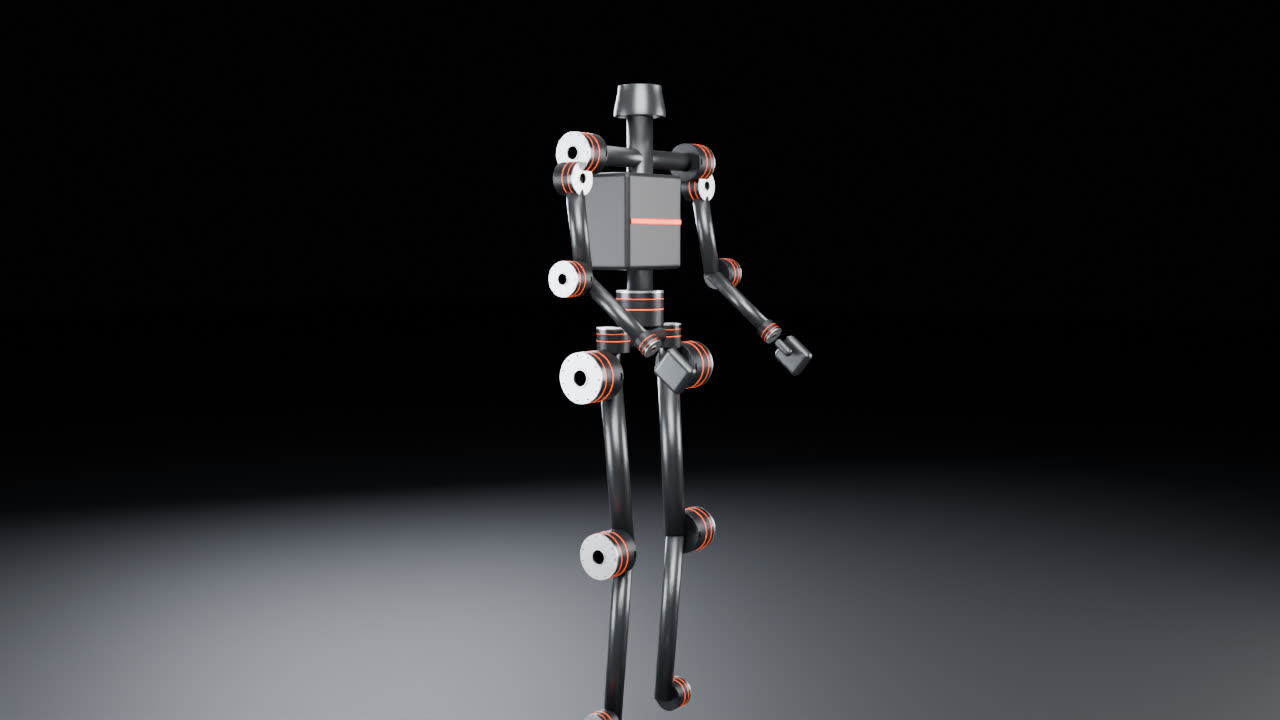
A robot is mostly joints.
Strip a humanoid to its frame and what's left is a battery, some tubes and the actuators that move it.
02
18 TORRQE Joints, three sizes.
J110 at the hips, knees and waist. J76 at the shoulders, elbows and ankles. J50 at the wrists and neck.
03
Into the knee.
One Joint, cut open.
04
Motor, Drive, Core, bearings.
The motor spins the sun gear. The planets carry the load and act as the bearing, so the joint stays short, stiff and free of backlash.
The lineup
Seven products. One stack.
TORRQE Joint
A complete actuator. Motor, Drive, Core and bearings sealed in one unit, in sizes from wrist to hip.
TORRQE Core
A gear-bearing reducer. The gears are also the bearing, so you get 33:1 with zero backlash in a short, stiff package.
TORRQE Drive
Motor control that stays smooth at near-zero speed, where ordinary controllers stutter.
TORRQE Bearings
Superelastic nickel-titanium balls and races. They shrug off shock, never rust and run without oil.
TORRQE Lightgear
Carbon-fiber gears with steel teeth. Lighter and quieter than all-steel gears.
TORRQE Surface
Oil-free solid lubricant coatings for parts that run hot, cold or in a vacuum.
TORRQE Rotor
A wave-shaped brake disc. Close to carbon-ceramic weight, made from steel.
Reduction inside a 76 mm Core
Backlash target for the gear-bearing Core
TORRQE Rotor, against 10.8 kg for cast iron
From motor control to the brake, one supplier
Figures from our CAD models. Prototype testing is under way.
Braking
Carbon-ceramic lightness. Steel cost.
Brake pads rub only the wave. Thin plates around it pull the heat out. The result is a disc a third the weight of cast iron, made from steel.
Masses computed from 336 mm CAD models. Illustrative until dyno testing.
How the wave works →Machines
Wherever something has to move precisely.
The same Joint family sits in a humanoid's knee, a robot dog's hip, an arm's wrist and a drone's camera gimbal. Open one to see every joint.
Markets
Built first for machines that can't fail.
We start where precision, toughness and an American supply chain matter most, then scale into the robots everyone will use.
All markets →Defense and rugged robots
Turrets, sensor masts, ground robots and gimbals that need US-made, shock-proof actuators.
Space and vacuum
Mechanisms that can't use oil: deployables, pointing systems and robotic arms in orbit.
Humanoids and legged robots
Joints that carry high torque in a small package, from wrist to hip.
Robot arms and automation
Stiff, backlash-free axes for precise, repeatable motion.
Drones and payloads
Gimbal and payload axes. We build what sits after the motor, not propeller motors.
Vehicles
Steering actuators, wheel-end reduction and the TORRQE Rotor.